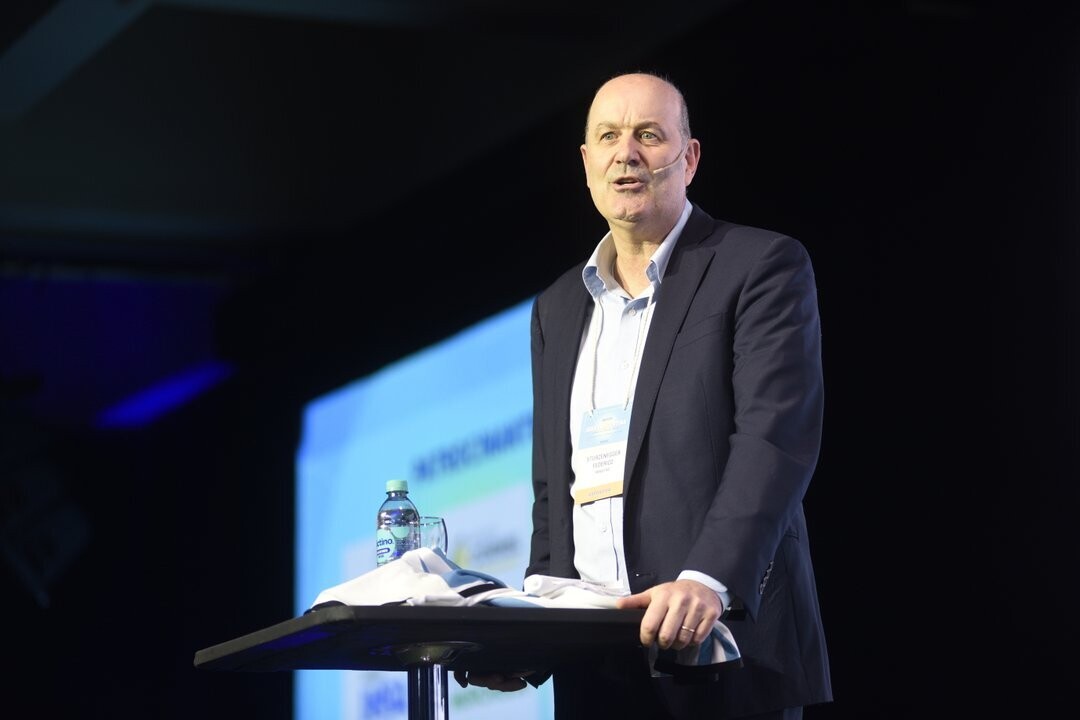
Minister of Deregulation and State Transformation Federico Sturzenegger stated today that the labor reform promoted by the Government aims to «achieve a labor market» in which «people's wages rise and there is more employment». «We need people to be able to have formal jobs. Argentina has not created formal jobs for 15 years, and we have a very serious problem in this regard,» the minister said in radio statements obtained by the Argentine News Agency. Sturzenegger assured that «in labor relations, everyone 'caranches' (leeches off), everyone bites a piece, starting with the State, which when hiring a worker collects impressive taxes». «Unions also 'caranche' with the union fee and the solidarity fee; the lawsuit industry with lawyers 'caranches'; employers 'caranche' with the issue of contributions,» he emphasized. For the official, who is working on aspects of the reform, what happens with formal employment «is like Jesus with the loaves, you have to give to all, but here there are no miracles, so the employer and the worker pay for it». «We can summarize it in a very impactful number,» he said, and explained that «wages are set in collective agreements between business and union representatives. It's about 100 thousand pesos ($100,000) per worker». For the official, this is a cost that «is a bit expensive, because we could be increasing the worker's salary by 100 thousand pesos per month,» he insisted. He added that regarding severance pay, «the problem we have with the 'lawsuit industry' that generates a lot of Uncertainty,» because in lawsuits «you don't pay one month for each year worked, but judges multiply it by two or three, and that's what we have to curb». «The compensation model of the UOCRA (Workers' Union of Construction) was very successful because it created a mechanism that brought labor litigation to zero. If construction could do it, we open that door to all employers,» he stressed.